Data Warehouse Consulting Services





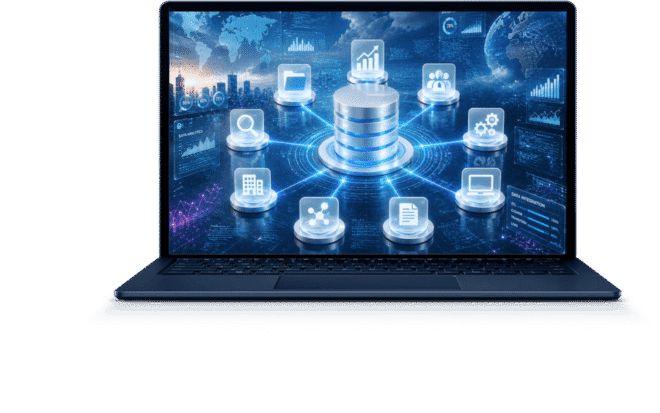

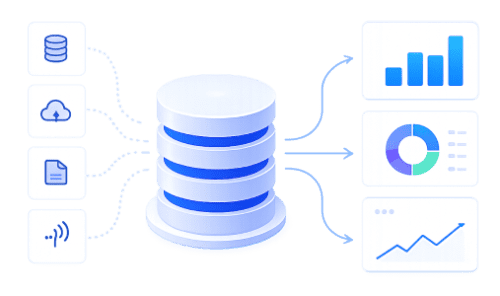
Combines diverse data sources, creating a unified source of truth.

Structured and accessible data supports faster, data-driven insights.

ETL processes filter, clean, and validate data, ensuring high-quality information.

to evaluate data sources readiness


The Challenge |
What We Build |
|---|---|
 Finance, sales and operations use different numbers
Inconsistent reports and metrics make it hard to see the real picture.
Finance, sales and operations use different numbers
Inconsistent reports and metrics make it hard to see the real picture.
|
 A centralized data warehouse with a single source of truth
Consistent, validated data across the organization for reliable reporting and analysis.
A centralized data warehouse with a single source of truth
Consistent, validated data across the organization for reliable reporting and analysis.
|
 Manual Excel reporting takes days
Teams spend too much time collecting, cleaning, and combining data instead of driving decisions.
Manual Excel reporting takes days
Teams spend too much time collecting, cleaning, and combining data instead of driving decisions.
|
 Automated ETL/ELT pipelines and reporting workflows
End-to-end automation that saves time, reduces errors, and accelerates insights.
Automated ETL/ELT pipelines and reporting workflows
End-to-end automation that saves time, reduces errors, and accelerates insights.
|
 ERP and CRM data is difficult to access
Important data is scattered across systems and difficult to extract or analyze.
ERP and CRM data is difficult to access
Important data is scattered across systems and difficult to extract or analyze.
|
 Business-focused data marts
Organized data marts for finance, sales, inventory, and operations — ready for analysis.
Business-focused data marts
Organized data marts for finance, sales, inventory, and operations — ready for analysis.
|
 Reports are slow, inconsistent, or unreliable
Poor data models and lack of validation lead to delays and wrong decisions.
Reports are slow, inconsistent, or unreliable
Poor data models and lack of validation lead to delays and wrong decisions.
|
 Optimized data models and data validation
High-performance models and reliable validation processes you can trust.
Optimized data models and data validation
High-performance models and reliable validation processes you can trust.
|
 Management cannot trust dashboards and KPIs
Different numbers across reports create doubt and reduce confidence in key metrics.
Management cannot trust dashboards and KPIs
Different numbers across reports create doubt and reduce confidence in key metrics.
|
 Data reconciliation and quality controls
Reconciled metrics, quality checks, and governance that increase confidence in every report.
Data reconciliation and quality controls
Reconciled metrics, quality checks, and governance that increase confidence in every report.
|
 Growth or M&A creates fragmented systems
New entities, tools, and processes lead to data silos and complexity.
Growth or M&A creates fragmented systems
New entities, tools, and processes lead to data silos and complexity.
|
 Scalable cloud data warehouse architecture
A flexible, future-proof foundation that scales with your growing business.
Scalable cloud data warehouse architecture
A flexible, future-proof foundation that scales with your growing business.
|

Better data. Smarter decisions. Stronger business.
A well-designed data warehouse brings clarity and control, helping you grow with confidence.
Get a free estimate for your data warehouse project
Seeking direction to get off the ground? Expert insight and strategy offered by a data warehouse consultant will help you to guarantee a flawless transfer into efficient data management.
Or text us via Messenger




OUR DATA WAREHOUSE CONSULTING SERVICES
Data Warehouse Consulting Services
- Gain a clear strategy for building, improving, or scaling your data warehouse environment. Data warehouse projects often raise questions long before development begins.
- Platform selection, data modeling, ETL architecture, reporting requirements, migration planning, and cloud adoption can all affect future costs and system performance.
Data Warehouse Design and Development
- Create a centralized repository for data from ERP, CRM, finance, operations, and other business systems. A unified data environment brings consistency to reporting and provides a reliable foundation for analytics and business planning.
- Our specialists design data models, storage architecture, and reporting frameworks that support accurate reporting across the organization.
Data Integration and
Migration
- To provide you with a modern platform that grows with your business and supports strategic decisions, we unify information from different systems and migrate it without loss.
- Our consultants find weaknesses and offer scalable solutions for working with large volumes of data. We configure real-time analytics and optimize the costs of supporting systems.
Cloud-Based Data Warehousing
- Cloud solutions are increasingly popular for their flexibility, scalability, and cost-effectiveness. Microsoft Azure stands out as a leading platform for modern data warehousing and integration.
- As an Azure Data Factory development company, we create seamless workflows to unify data from multiple sources. Whether integrating complex datasets or automating processes, we ensure optimized, scalable, and cost-efficient solutions tailored to your business needs and future growth.
Data Warehouse Modernization and Optimization
- Slow reporting, long processing times, and legacy ETL workflows gradually reduce the efficiency of any data warehouse. However, modernization helps improve query performance, simplify administration, and support new analytical requirements.
- And as a data warehouse company, we review existing architectures, optimize data processing, and eliminate technical bottlenecks that impact reporting speed.
Data Warehouse Support and Maintenance
- Support covers routine administration, health monitoring, scheduled updates, security reviews, environment configuration, and change management to keep your platform operating without interruptions as business needs evolve.
- Our consultants continuously improve warehouse performance, update ETL workflows, extend data models, implement new business requirements, and resolve issues before they affect reporting. This keeps your analytics environment stable while allowing it to grow with your business.

Azure
Synapse Analytics

Snowflake
Cloud Data Platform

BigQuery
Serverless Analytics

AWS
Redshift Analytics

Faster insights

Better decisions

Lower costs

Scalable growth

Want the same results when designing a data warehouse?
Let’s schedule a 30-minute online meeting to discuss your analytics priorities and get a quote.
Or text us via Messenger
OUR DWH IMPLEMENTATION PROCESS
A data warehouse project typically includes several stages. It starts with consulting and architectural planning. Then the platform
is developed and configured. After that comes data migration from existing systems. Once everything is launched, ongoing
support helps maintain stability and performance.

We'll start by learning about your business. What are your goals? What are your main challenges? This is necessary to develop a data warehouse architecture that meets your goals.

Next, we design the architecture and recommend the best platform for your needs. This can be on-premises, cloud, or a hybrid solution.

Once the design is finalized, we implement the data warehouse and integrate it with your existing systems. This step ensures a smooth transition and minimal disruption.

With everything in place, we implement the data warehouse solution, ensuring all components are fully functional and that the system integrates seamlessly with your workflows.

Before going live, we thoroughly test the system to identify and address any issues. We also optimize for performance, ensuring the data warehouse operates with speed, reliability, and scalability.

Once launched, we train your team to use the new system confidently. We also provide detailed documentation and ongoing support to ensure your data warehouse continues to meet your evolving needs.









|
Project Type
|
Typical Timeline
|
Typical Budget
|
|---|---|---|

Starter Data Warehouse 1–5 data sources, Power BI reporting |
 4–8 weeks
|
 Starting from $25,000
|

Business Data Warehouse Multiple systems, ETL/ELT, governance |
2–4 months
|
Starting from $60,000
|

Enterprise Data Warehouse Advanced architecture, real-time analytics, |
4–9 months
|
Starting from $150,000
|
Have a data warehouse project in mind?
Let's schedule 30-minutes online meeting to discuss your BI needs and you'll get a detailed quote
Or text us via Messenger
Why Choose Us as Your Data Warehouse Consulting Company
Our speciality at Cobit Solutions is providing scalable, effective, customised data warehouse development services fit for your particular corporate objectives. Our solutions are meant to simplify your data management and position you for long-term success whether your company is tiny and trying to grow or managing a big company in need of operational simplification.

Start in 1 week, work on EST hours, get results fast

25+ Data, BI & Finance experts ready to help

8+ years delivering data solutions in 22+ industries

Trusted by 70+ clients across 5 countries

Save 40% vs. building the same team in-house

Full end-to-end delivery, from DWH to support & AI







Need control, predictability, and decisions you can trust? Order data consulting and create an analytical system that will support your enterprise's planning, risk management, and financial stability.

NDA Before Discovery
Protect sensitive business information.

Architecture Review First
Reduce risks before implementation begins.

Data Validation Checks
Verify data accuracy throughout every stage.

Transparent Delivery
Clear rates, roles, timelines, and responsibilities.

Full Asset Ownership
Keep control of source code, data, and documentation.
Microsoft & Azure Skills
Built on proven Microsoft technologies.

Cloud or On-Premises
Built on proven Microsoft technologies.

Testimonials for Our Data Warehouse Consulting

Manufacturing

Steelite International USA
“Cobit Solutions quickly understood the complexity of our environment and delivered strong results across a wide range of subject areas. They adapted fast, worked effectively under tight timeframes, and consistently provided high-quality technical and business input throughout the project. We now see them as a consistent and valuable partner in our ongoing data journey.”
Josh Rammel
Global Head of IT

Distribution & Wholesale
Site Landscape Development
“Second only to the Mona Lisa, it is the most beautiful work of art I’ve ever seen in my life… For real, it’s great. It’s exactly what we needed and we’re looking for. It’s good visualizing it that way. All is very good. This stuff’s awesome.”
Andrew Craft
President at Site Landscape Development

Logistics
Self-Storage Facilities in 6 countries
“We want to express our sincere appreciation for all the support you’ve provided… From tackling urgent challenges like data upload to creating the initial flash report and making progress on complex issues; your contributions have been invaluable.”
Julia MacDonald
Group FP&A Manager

Retail
“HELEN MARLEN” fashion boutiques
«Now all my data is updated every day. I take a look from time to time, when I’m making my own report, whether the numbers coincide. Having made sure it’s alright, I just carry on with my life in peace.»
Serhii Tupkalo
Board member, CFO at HELEN MARLEN L.P.

HoReCa
“Salateira” restaurants chain
“The project helps us quickly and remotely see the information available for the company all over the world, besides it is updated daily.”
Olena Vasylevska
Chief Financial Officer of the chain of restaurants "Salateira"

IT companies
SPAN
“Certainly, the automation of business analysis will contribute to the flexibility and efficiency of making important decisions for the company while maintaining high standards of information security.”
Oleg Avilov
CEO at SPAN

IT companies
The App Solutions
“The work delivered by Cobit Solutions met all expectations and the team demonstrated their skill and expertise well. I highly recommend the services and look forward to future collaborations.”
Kateryna Ishchuk
Partnerships Director The App Solutions

Distribution & Wholesale
Frendt LLC
“Automation of business analysis helps us to see and control key metrics in real time, both of individual areas and of the entire business as a whole, which allows us to make timely and effective management decisions.”
Andrii Marchenko
Chief Information Officer of Frendt LLC

IT companies
Alpha Serve
“The developed perfectly looking BI templates allow our clients to quickly build their first report in Power BI and include the most relevant KPIs for reports.”
Anna Odrynska
Chief Strategy Officer at Alpha Serve

Healthcare
“Dobrobut” clinics chain
“Thanks to dashboards, we can also make a forecast of our financial indicators for a month, quarter or half a year and have the opportunity to compare the actual financial result with our predicted one – to understand the completeness of the reflection of expenses and income.”
Andrey Arbuzin
Deputy financial director