Data Engineering Services & Consulting Solutions







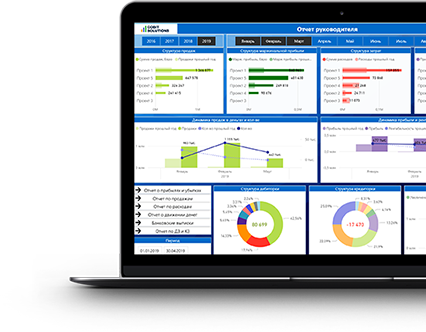
Make decisions without delay—the moment a challenge arises.

Assess potential risks based on business metrics.

Manage development systematically—taking all influencing factors into account.

for business intelligence succesfull implementation


If your data management system doesn’t meet your needs, you’ve been stuck in “yesterday” while your competitors are moving ahead. Data engineering consulting helps remove these limitations and create a foundation for sustainable growth.

Transform Raw Data into Actionable Business Intelligence
When data is stored in different systems, it does not provide a comprehensive view of the situation. Reports are generated with delays or require manual verification before they can be used. However, data engineering services make it possible to integrate various sources and establish a unified processing logic. As a result, the analytics become suitable for regular management decision-making.
Reduce Infrastructure Costs with Scalable Data Engineering
Infrastructure always expands along with data volume, but costs rise faster than the actual benefits. In such cases, some resources remain underutilized, and changes require additional investment. An optimized architecture allows for more efficient use of resources and better cost control. Therefore, transitioning to scalable data engineering reduces unnecessary costs.
Enable Advanced Analytics and AI/ML Capabilities
Analytical initiatives often stall at the idea stage due to unstable data structures. The data is not ready for forecasting or complex models. A properly engineered data foundation enables the use of advanced analytics and machine learning. When data is structured and stable, models deliver predictable and useful results.
Maintain Compliance with Enterprise-Grade Data Security
As a business grows, additional requirements for data protection and access control may arise. Managing policies and tracking changes can sometimes become complicated. A centralized architecture allows you to streamline access and security policies. As a result, data is controlled at every stage of processing in accordance with corporate requirements.


Identify bottlenecks before they start impacting your business growth
Find out how urgently your business needs data engineering consulting services. Submit a request and receive a brief assessment: whether your current analytics meet your business objectives, where bottlenecks exist, and which changes should be prioritized.
Or text us via Messenger




Data Pipeline Design, Development & Optimization Services
This is a comprehensive service that covers the entire lifecycle of information flows. It begins with defining the integration rules between systems—the analytical architecture will depend on them.
During development, it is important to organize the transformation of “raw” data into structured data ready for analytics. This includes ETL/ELT processes, configuring cloud services, and tools for continuous data loading.
A significant aspect of development is monitoring—implementing data quality control and performance tracking systems to ensure that data pipelines remain stable even as the workload increases. The final focus is on integrating the data collection system with business analytics. Ultimately, BI systems provide managers with up-to-date metrics in real time.

Cloud Data Infrastructure Engineering & Migration Consulting
These services help companies safely and efficiently transition from outdated or overloaded systems to modern cloud platforms. As part of our data engineering consulting solutions, we analyze the current architecture,
identify vulnerabilities, and develop a migration plan that takes into account business objectives and security requirements.
Next comes the practical part: developing a strategy for migrating data and processes to the cloud, selecting the optimal services (Azure, AWS, GCP, or hybrid solutions), and configuring the technical aspects. Data engineering consultancy also includes optimizing infrastructure costs and implementing monitoring and automation tools so that the company receives not just “migrated data,” but a stable, flexible, and scalable system.

ETL/ELT Process Engineering & Performance Optimization
This service provides businesses with fast and reliable data conversion into a format suitable for analytics. The development process involves creating and configuring data pipelines that automatically collect information from various sources,
clean it of errors and duplicates, transform it into the required structure, and load it into a data warehouse or analytics system.
A key stage of the service is performance optimization: we analyze how existing processes work, identify bottlenecks, and implement solutions to speed up processing. This may include parallel task execution, optimization of database queries, use of cloud services for scaling, and automation of data quality control. As a result, the company receives a stable system that operates quickly even as data volumes grow, and management decisions are made based on up-to-date and accurate data.

Big Data Platform Implementation & Strategic Architecture Consulting
These are comprehensive big data engineering services that cover both the technical and business aspects of information management. They include an audit of existing systems and processes to understand how the company currently collects, stores, and analyzes information.
Based on this, a strategic architecture is developed: key components of the big data platform are identified, along with methods for integration with existing systems and future scaling scenarios.
As part of our consulting services, we also develop an implementation roadmap—from selecting technologies (Hadoop, Spark, cloud services) to configuring data management, security, and access processes. Cost optimization is a key element: our data engineering experts help you understand which solutions will deliver the greatest impact with minimal investment. Additionally, the consulting service covers the organization of data-driven teamwork to ensure your analysts, engineers, and managers have a unified, consistent view.

Real-Time Data Processing & Streaming Analytics Solutions
A service that enables companies to process information instantly, without waiting for traditional “nightly” uploads or lengthy processing cycles. It involves building systems that collect data (transactions, sensor readings, customer actions) from various sources,
transform it “on the fly,” and immediately feed it into analytical tools.
This enables businesses to respond to events as they occur: financial companies detect fraudulent transactions before they are completed, e-commerce platforms see customer behavior in real time, and logistics companies optimize routes while on the move. Stream analytics also allows for forecasting based on current data rather than outdated snapshots. As a result, the company gains a competitive advantage—decisions are made faster, more accurately, and based on the full picture.

Data Governance Consulting & Quality Management Services
The service allows you to streamline data work and transform it from a set of disparate processes into a managed system with clear rules. As part of the consulting, an audit of current data flows is conducted, points of error, duplication,
and loss of information are analyzed, and quality standards and data access rules are determined at the level of the entire organization.
The work includes building practical mechanisms: data verification and cleaning at the processing stages, control of the consistency of indicators between systems, setting up quality monitoring, and metadata management. We pay special attention to roles and responsibilities—who is responsible for the indicators, how the calculation logic is recorded and how changes are controlled.
As a result, the company receives not only tools but also a clear data management model: indicators become reproducible, data consistent, and analytics suitable for making management decisions without additional verification.

Get a powerful analytics system that reduces future maintenance costs starting at $80/hour
Work with leading data engineering consultants to stabilize performance, accelerate data processing, and build a scalable architecture. Get a free estimate of implementation costs and timelines.
























Market leaders choose our data engineering services

Healthcare
“Dobrobut” clinics network
Result:
- The clinic’s directors receive a P&L report updated daily.
- Management uses a daily dashboard for budget-versus-actual analysis of operational indicators.
- Dashboards combine data from ERP and the Doktor Eleks medical system.

Logistics
Meest China
Result:
- Dashboards combine data from ERP and CRM.
- Route margins are automatically calculated in dashboards and monitored every day by management.
- A Profit & Loss report is generated daily.

Manufacturing
Steelite International USA
Result:
- Automated reporting, reducing turnaround from 10 days to overnight.
- Scaled visibility from regional to global (US, UK, Canada, Europe, Australia).
- Centralized data enabled data-driven decisions on a weekly cadence instead of monthly.
Industry-focused case studies designed for your needs


Get a brief, free consultation to determine the best way to modernize your infrastructure
In just 30 minutes, our data engineering experts will analyze your current system, identify where you’re losing control, and pinpoint risks in your metrics. They recommend what needs to be changed first and determine whether it makes sense to make any changes at all.
Or text us via Messenger
Testimonials for Our Data Engineering Services

Manufacturing

Steelite International USA
“Cobit Solutions quickly understood the complexity of our environment and delivered strong results across a wide range of subject areas. They adapted fast, worked effectively under tight timeframes, and consistently provided high-quality technical and business input throughout the project. We now see them as a consistent and valuable partner in our ongoing data journey.”
Josh Rammel
Global Head of IT

Distribution & Wholesale
Site Landscape Development
“Second only to the Mona Lisa, it is the most beautiful work of art I’ve ever seen in my life… For real, it’s great. It’s exactly what we needed and we’re looking for. It’s good visualizing it that way. All is very good. This stuff’s awesome.”
Andrew Craft
President at Site Landscape Development

Logistics
Self-Storage Facilities in 6 countries
“We want to express our sincere appreciation for all the support you’ve provided… From tackling urgent challenges like data upload to creating the initial flash report and making progress on complex issues; your contributions have been invaluable.”
Julia MacDonald
Group FP&A Manager

Retail
“HELEN MARLEN” fashion boutiques
«Now all my data is updated every day. I take a look from time to time, when I’m making my own report, whether the numbers coincide. Having made sure it’s alright, I just carry on with my life in peace.»
Serhii Tupkalo
Board member, CFO at HELEN MARLEN L.P.

HoReCa
“Salateira” restaurants chain
“The project helps us quickly and remotely see the information available for the company all over the world, besides it is updated daily.”
Olena Vasylevska
Chief Financial Officer of the chain of restaurants "Salateira"

IT companies
SPAN
“Certainly, the automation of business analysis will contribute to the flexibility and efficiency of making important decisions for the company while maintaining high standards of information security.”
Oleg Avilov
CEO at SPAN

IT companies
The App Solutions
“The work delivered by Cobit Solutions met all expectations and the team demonstrated their skill and expertise well. I highly recommend the services and look forward to future collaborations.”
Kateryna Ishchuk
Partnerships Director The App Solutions

Distribution & Wholesale
Frendt LLC
“Automation of business analysis helps us to see and control key metrics in real time, both of individual areas and of the entire business as a whole, which allows us to make timely and effective management decisions.”
Andrii Marchenko
Chief Information Officer of Frendt LLC

IT companies
Alpha Serve
“The developed perfectly looking BI templates allow our clients to quickly build their first report in Power BI and include the most relevant KPIs for reports.”
Anna Odrynska
Chief Strategy Officer at Alpha Serve

Healthcare
“Dobrobut” clinics chain
“Thanks to dashboards, we can also make a forecast of our financial indicators for a month, quarter or half a year and have the opportunity to compare the actual financial result with our predicted one – to understand the completeness of the reflection of expenses and income.”
Andrey Arbuzin
Deputy financial director