Next-Gen Data Quality Consulting Services






Define standards for data system management.

Get a report on current discrepancies.

Improve the quality of analytics and record the results.

for business intelligence succesfull implementation




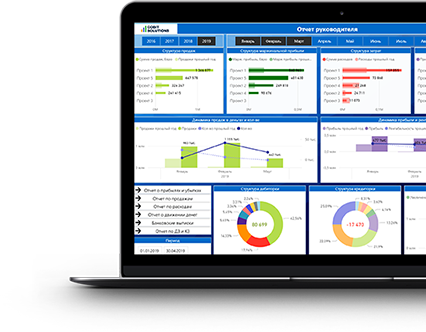
After Data Quality Consulting...
You will have a clear data structure, fewer reporting errors, stable analytics, faster decision-making, and readiness for AI and advanced analytics.

Check the quality of data in your systems
Contact Cobit Solutions to audit your data sources and identify duplicates, logical errors, discrepancies between systems, and other factors that may distort analytics.
Or text us via Messenger



Our clients often order Data Quality Consulting services when reports show inconsistent figures, analytics lose accuracy, or data from different systems do not match.

Transforming data into business value
When data is consistent, free of duplicates and logical errors, reports begin to show the real picture of the business. Reports no longer contradict one another, and key indicators are stable. These are the solutions we offer our clients to create a reliable foundation for financial planning, sales forecasting, and strategic decisions.
Individual information quality models
Each company has its system architecture, data sources, and business processes, so there are no universal quality-control rules. An individually developed model allows you to maintain consistency of indicators across different information sources. As a result, analytical systems operate on accurate, stable data.
Compliance with regulatory requirements and security
In many industries, information management is linked to regulatory requirements and access policies. Data quality and structure control help maintain the transparency of information required for audits and inspections. This reduces the risk of reporting errors and ensures secure handling of critical data.
Analytics stability and system integrity
When information is consistent across different platforms, analytical tools work predictably and without discrepancies in metrics. This allows you to quickly find deviations, control business metrics, and maintain report stability. After working with our team, your analytics will truly become a reliable tool for business management and development.

Experience and results that our
clients rely on
Companies turn to Cobit Solutions for accurate analytics, consistent data across systems, and reliable reporting. Our approach to working with data is based on practical experience implementing analytical solutions across industries and helps build a manageable data system for businesses.

Quick start and initial results in just 2 weeks

25+ BI and Finance experts without hiring pain

Proven BI delivery for 8 years in 22 industries

More than 70 happy clients across 5 countries

Save 35% compared to W-2 payroll or contractors

Full end-to-end delivery, from reporting to support







Need a data system you can rely on for reports and decisions? Build a stable analytical foundation for business development with Cobit Solutions.
KEY BUSINESS BENEFITS OF DATA QUALITY CONSULTING

Accurate reports and stable analytics
When data is cleaned of duplicates, omissions, and logical errors, the figures in reports no longer contradict each other. This allows managers to make decisions based on the real picture of the business, rather than assumptions.
In practice, Cobit Solutions can achieve 98–99% accuracy in reporting. This means that the risk of erroneous management decisions is reduced by almost half.

Data consistency across systems
CRM, ERP, financial systems, and analytics platforms are starting to use the same metrics. This eliminates discrepancies between departments and simplifies data management across the company.
According to Gartner estimates, companies with consistent data reduce integration costs by up to 30%. In real-world projects, report generation time can be reduced from several hours to several minutes.

Reducing operational risks
Incorrect data often leads to financial errors, inaccurate forecasts, or reporting issues. Data quality control helps reduce these risks and improve the reliability of business processes.
According to IBM, poor data quality can cost companies up to $3.1 trillion annually worldwide. Implementing control systems can reduce critical errors in financial processes by 20–40%.

Faster implementation of analytical solutions
When the data structure is organized, it is much easier to implement BI tools, automated analytics, and forecasting systems. This reduces the time to launch new solutions by an average of 25–40%.
In Cobit Solutions projects, BI solution integration has been reduced from several months to several weeks. This gives businesses a competitive advantage by providing faster access to insights.

Preparation for data scaling and analytics
According to McKinsey estimates, companies with a high-quality database implement AI solutions 2–3 times faster. In Cobit Solutions' practice, this means that customers are ready to scale without additional time and resource costs.
This reduces financial risks and increases transparency in working with information. Our database modernization services include internal requirements and external regulatory standards. This allows you to work in a controlled environment with clear rules and predictable processes.

Increasing trust in data within the company
When indicators in reports are stable and consistent, teams actively use analytics in their daily work. This creates a culture of trust in data, where decisions are based on facts rather than intuition or conflicting sources.
According to a study by Experian, more than 70% of companies consider data quality a key factor in strategic decision-making. In Cobit Solutions projects, team engagement with analytics increased by 20-30% after implementing data quality control systems.
Work with data quality consultants trusted by companies with complex analytics – from $60/hour
Develop a clear plan to improve data quality that will help eliminate reporting errors, reconcile metrics across systems, and increase confidence in business analytics.
Or text us via Messenger















Customers Trust Our Data Quality Consulting
Cases from various industries confirm our experience and professional approach to working with data.

Healthcare
“Dobrobut” clinics network
Result:
- Clinic's directors got daily updated P&L report;
- The management uses daily dashboard with budget/actual analysis on operational indicators;
- Dashboards combine data from ERP and the Doktor Eleks medical system .

Logistics
Meest China
Result:
- Dashboards combine data from ERP and CRM;
- Routes margin is automaticaly calculated in dashboards and monitored every day by management;
- Daily generated Profit & Loss report;

Manufacturing
Steelite International USA
Result:
- Automated reporting, reducing turnaround from 10 days to overnight.
- Scaled visibility from regional to global (US, UK, Canada, Europe, Australia).
- Centralized data enabled data-driven decisions on a weekly cadence instead of monthly.
Industry-focused case studies designed for your needs


Partner with COBIT SOLUTIONS for comprehensive data quality consulting
Get a clear data quality management strategy, consistent metrics across systems, and a stable foundation for accurate analytics and management decisions.
Or text us via Messenger